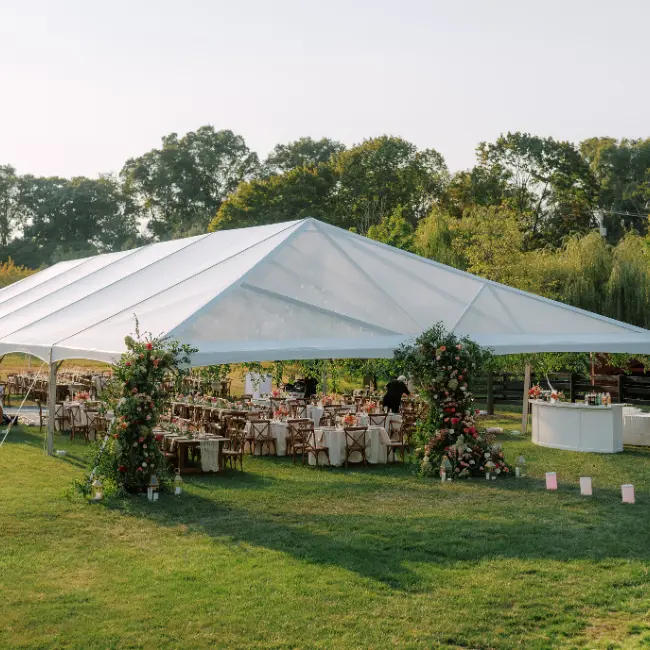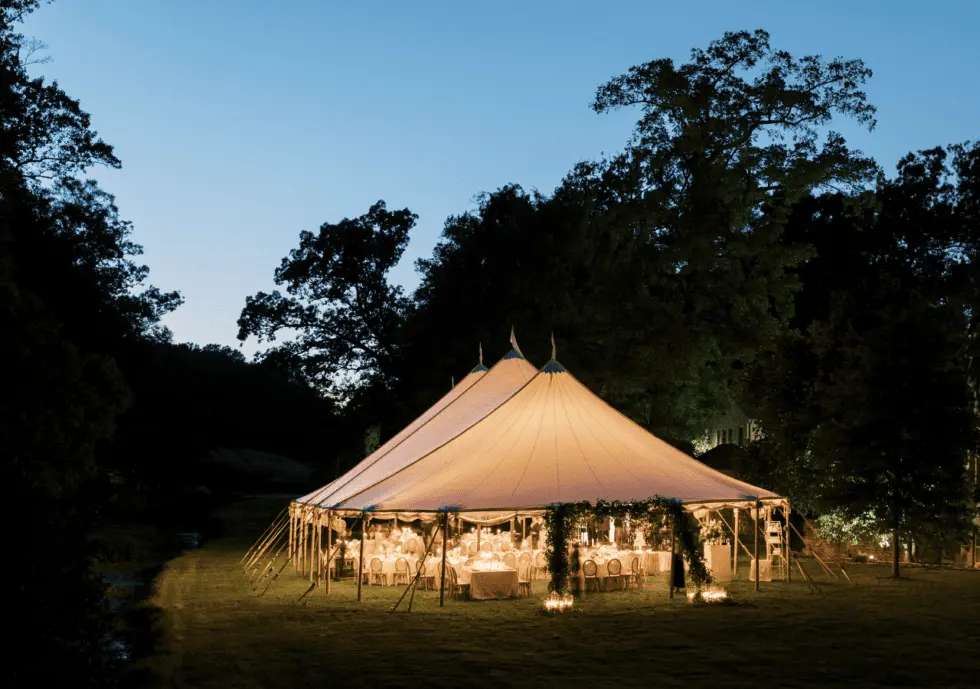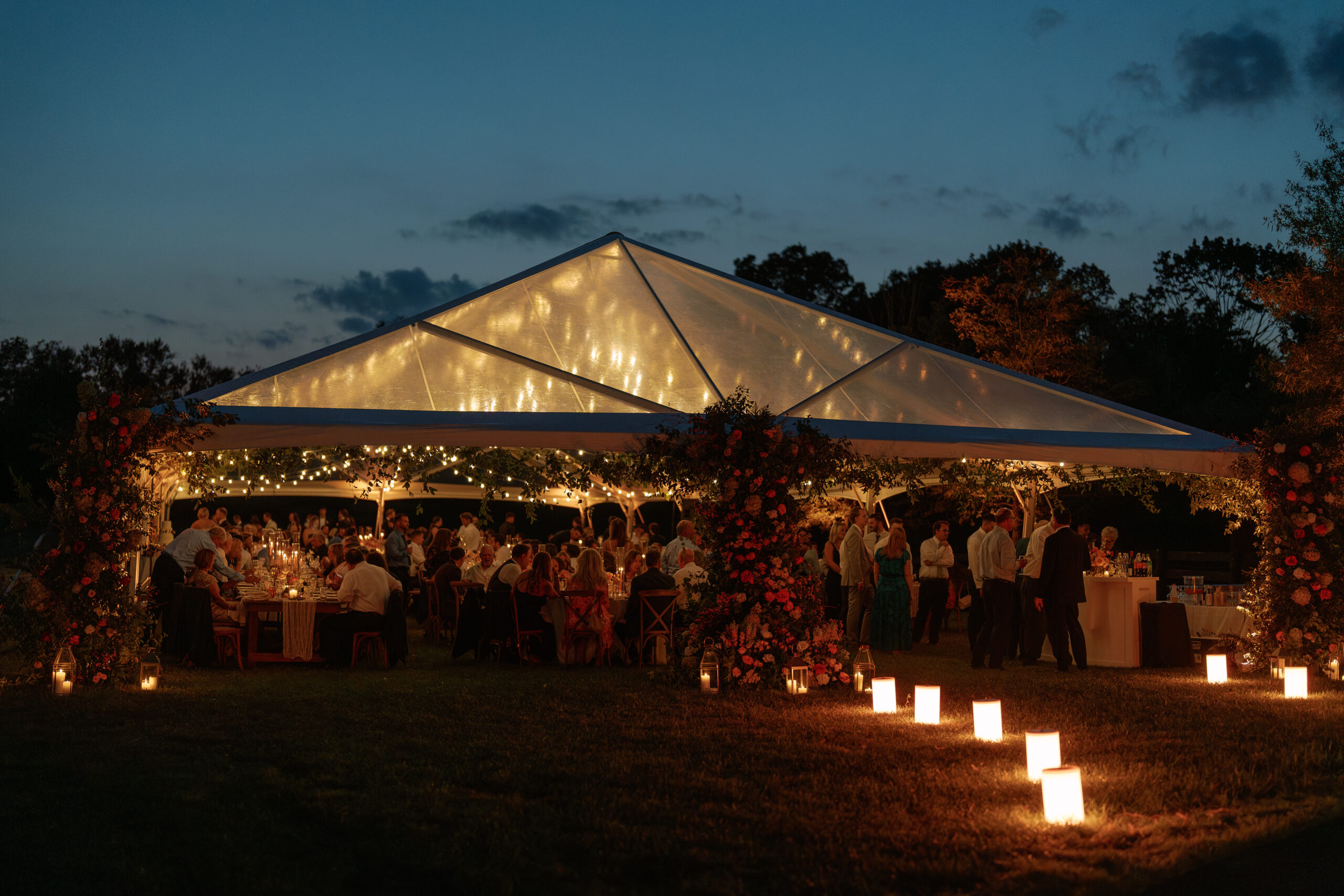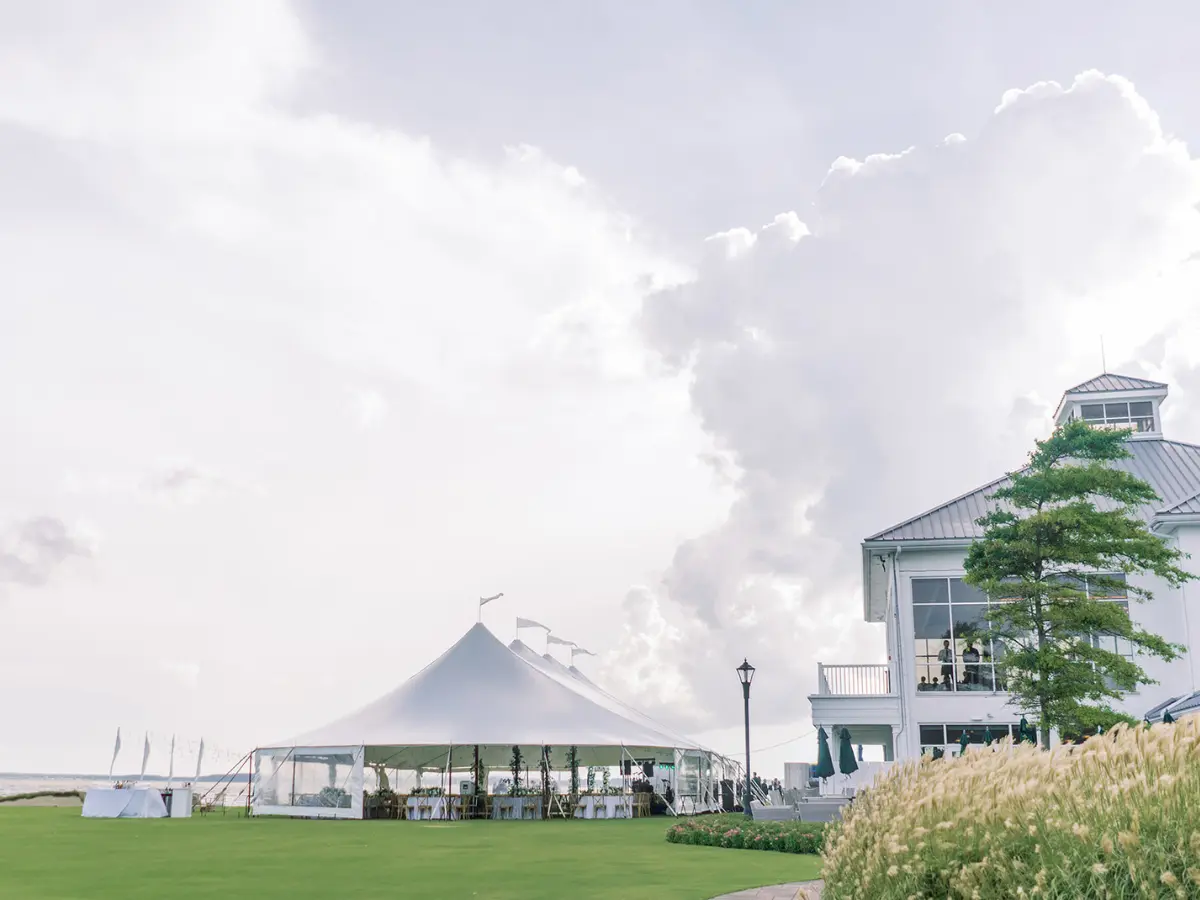
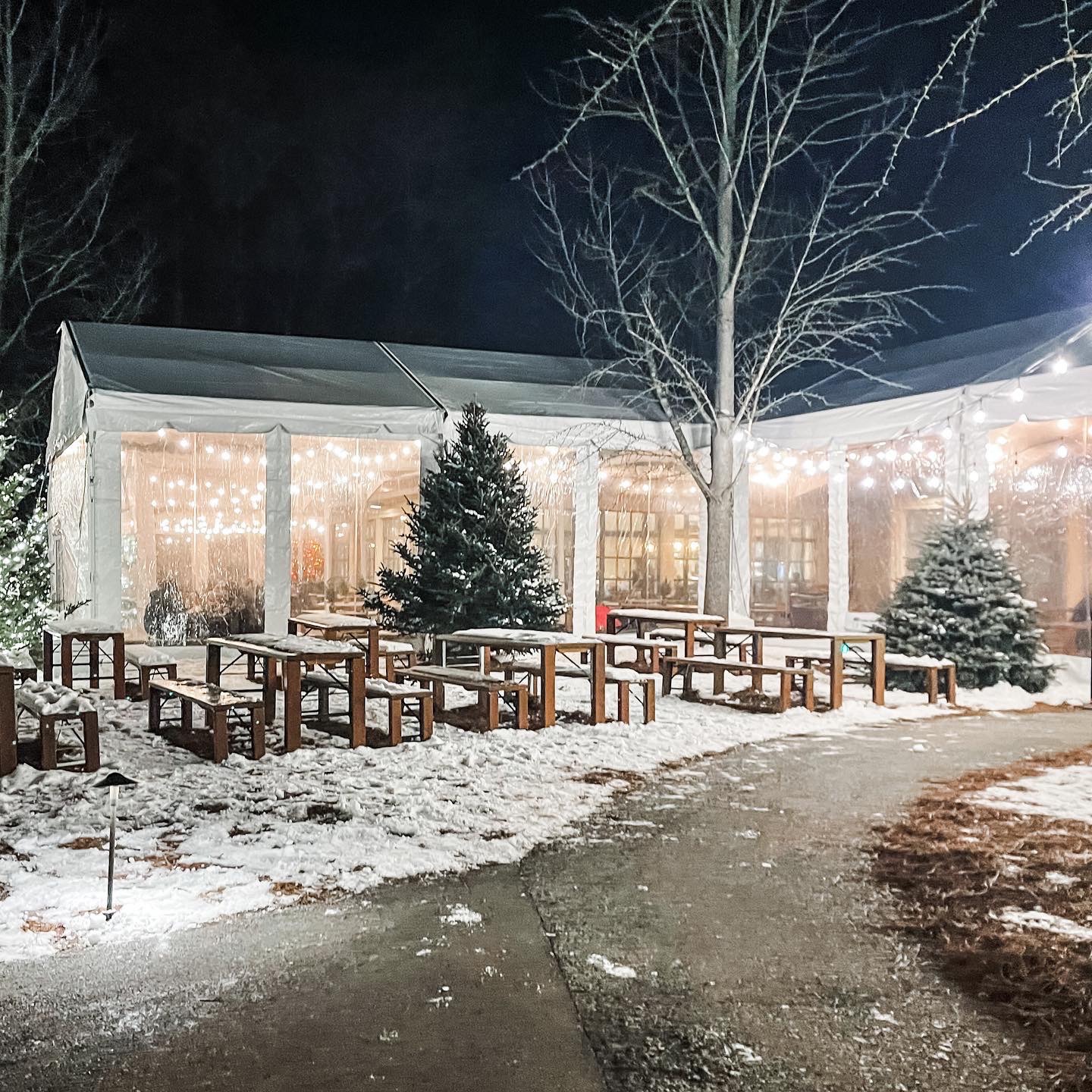
A tent can stay comfortable well into the cold months, but heat alone won't do it. Sidewalls to hold the warmth in, heaters sized to the tent and the night's temperature, and flooring to keep guests off cold ground work together, and all three are worth planning from the start rather than adding at the end.
Here's what each piece does, how to think about how much heat you need, and what to settle before your event date.
Why heat is only part of the answer
A tent with open sides loses heat almost as fast as a heater can make it. That's why sidewalls come first. They close the tent in, block the wind, and turn the space inside into somewhere heat can actually build up. Clear sidewalls keep the view, which matters for a garden or waterfront setting, while solid white sidewalls hold a little more warmth and give a cozier feel.
Flooring matters more in cold weather than most people expect. Cold rises from the ground, especially on grass after a few days of frost or rain, and guests feel it through their shoes long before they notice the air temperature. A raised tent floor keeps everyone off the cold, damp ground and makes the whole space feel warmer.
Then comes the heat itself.
How tent heating works
Tent heaters are sized by how much heat they put out, measured in BTUs. Larger tents and colder nights need more output, which can mean a larger heater or several working together.
Our tent heaters run on propane and sit outside the tent, sending warm air inside. That keeps the heater and its fuel out of the space your guests are using, so the layout inside the tent stays exactly as planned.
Patio heaters are a different tool. They warm open-air spaces outside the tent, such as a cocktail hour on the lawn or a terrace where guests gather before dinner. They are for open-air use only and are never placed under a tent canopy.
How much heat does a tent need?
There's no single formula, because it depends on more than the size of the tent. What we can tell you is what changes the answer, so the conversation with your rental team starts in the right place.
The size of the tent. A larger tent holds more air to heat. The height matters too: a high-peak or sailcloth tent has more space above guests' heads, and warm air rises into it.
The night's temperature. Heating a tent from 50 degrees outside is a very different job from heating it from 30. Plan for the coldest point of the evening, not the temperature when guests arrive.
Sides up or down. An enclosed tent holds heat. An open one barely holds any, so if the sides need to stay partly open for the view or the flow of guests, plan for more heat.
Clear tops. A clear-top tent keeps the night sky, but it also lets heat escape more easily than a solid white top. Our guide to clear vinyl tents in winter covers what to plan for.
How the space is used. A dance floor full of people warms up on its own. A seated dinner for older guests near the tent walls needs more help. The layout shapes where heat should go.
Because these all interact, the right setup comes from looking at the whole event together, which is part of what our team does when we put your quote together.
Placement and safety
Tent heaters need a safe spot outside the tent with clearance around them, and enough propane to last the whole event. Patio heaters stay in the open air, away from the tent entirely. Local requirements for heated tents vary, and some events need a permit or an inspection.
For longer events or colder nights, the heaters may need more propane before the evening ends. We suggest adding a tent attendant, a service you can request with your rental, who stays on site to look after the heaters and refuel them if needed, so no one on your guest list has to think about it.
This is one of the reasons a site visit helps. For a site we haven't worked at before, we'll come and take a look. For venues we work at regularly, we often already know where heaters fit and how the space behaves on a cold night.
Installation is included
As with lighting, our crew puts the tent heaters in place during installation and tests them before we leave, so the heat is ready to go on the day. On a week when you have plenty else to do, that's one less thing on your list.
A few things that make a big difference
Start the heat early. A tent takes time to warm up, so heaters should be running well before guests arrive rather than switched on when the first people walk in.
Mind the entrances. Every time the tent opens, warm air escapes. A covered entrance, or placing the bar and coat check away from the main doorway, keeps the heat where guests are sitting.
Plan the lighting with the heat. Cold-weather events run after dark, and by December the sun sets before five. Our tent lighting guide walks through the options.
Book early in peak season. Heaters, sidewalls and flooring are in demand for holiday events. If you're planning a December party, our guide to booking holiday party rentals explains the timing.
Where to start
If you're planning a tented event in the cooler months, the most useful things to know first are your guest count, the date and time of the event, and where the tent will go. From there, our team can recommend the right combination of sidewalls, flooring and heat for your space and the night you're planning.