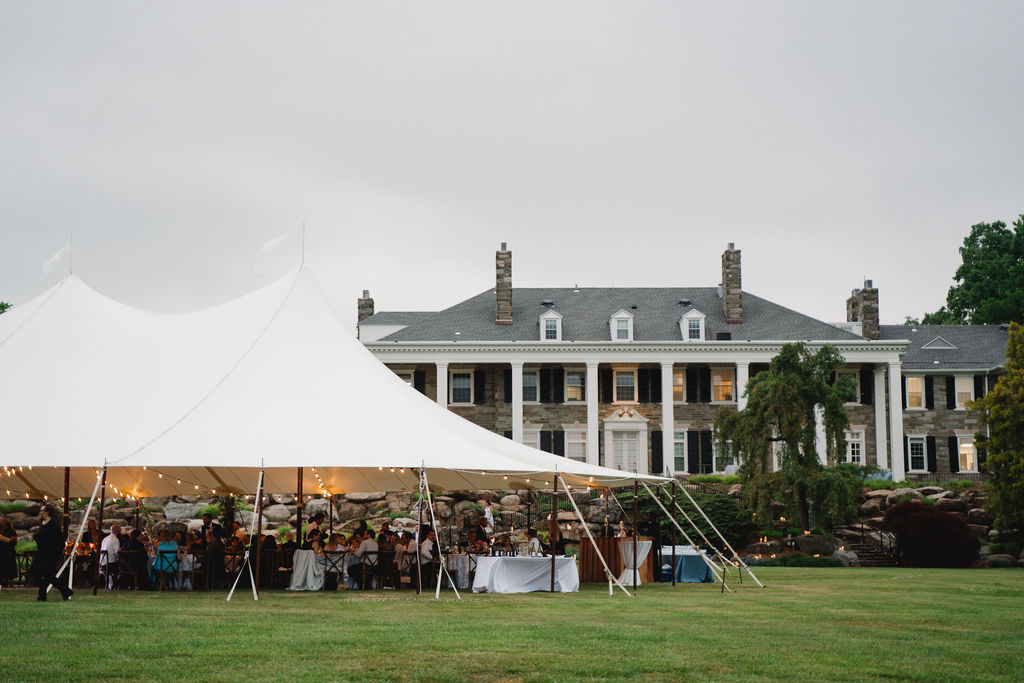
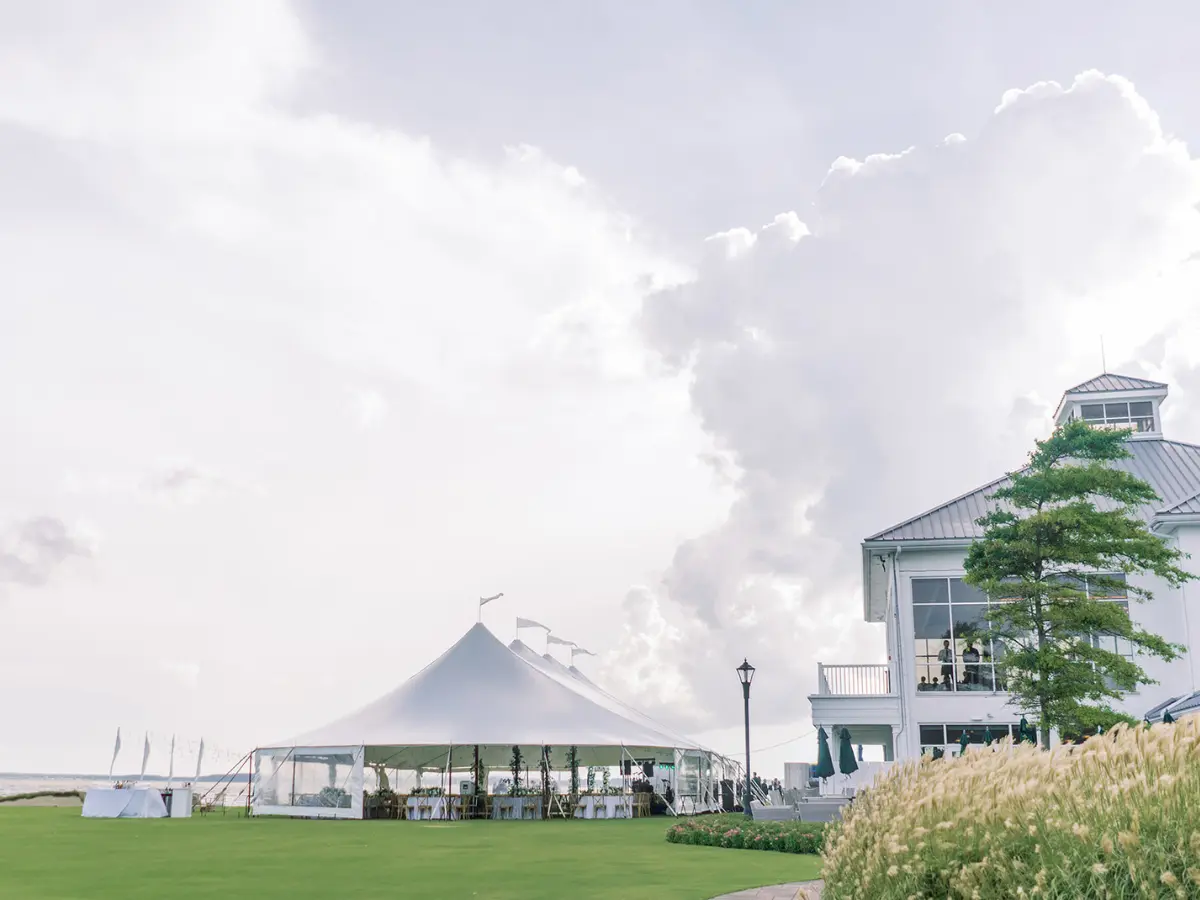
The most underrated decision for a summer event isn’t only what’s over your guests. It’s when they’re under it.
A tent provides essential coverage and creates a defined setting for an outdoor celebration, but the tent itself is only one part of guest comfort. The event timeline, tent placement, airflow, sidewalls and surrounding spaces all influence how the day feels—especially during July and August.
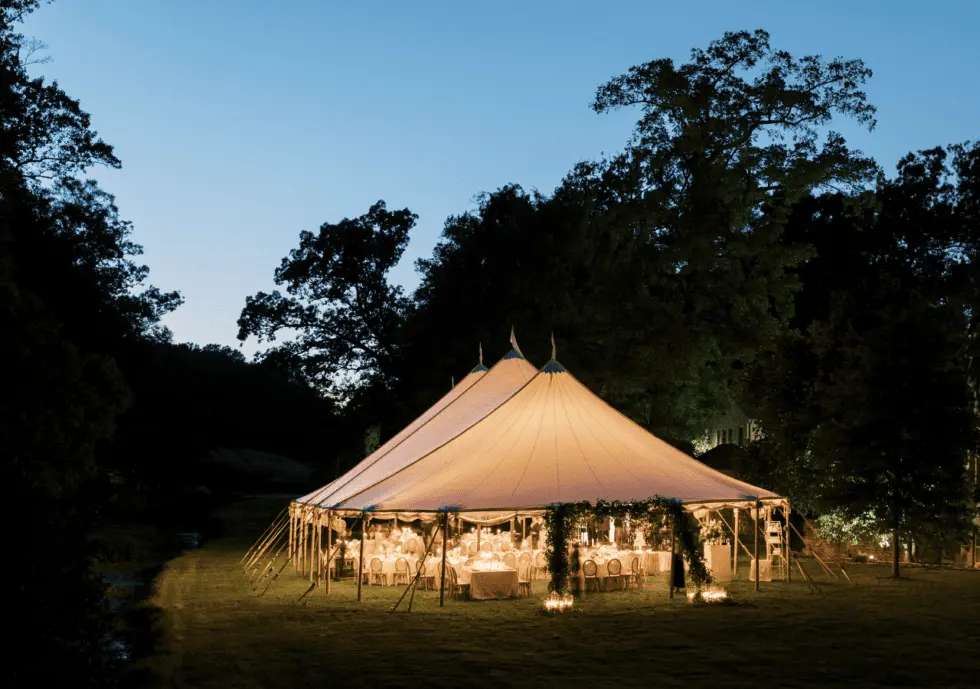
A 4:00 p.m. ceremony and a 6:30 p.m. ceremony can feel like two completely different events, even when they happen at the same venue. A tent that feels warm during cocktail hour may become the best room of the night once the sun drops.
Here’s what to consider when planning a summer tented wedding, fundraiser, corporate gathering or private celebration.
Begin With the Event Timeline
The temperature printed in the forecast doesn’t tell the whole story. Direct sunlight, humidity and the time of day can make an outdoor space feel significantly warmer.
Before choosing the layout, walk through when guests will use each part of the property:
- What time will the ceremony begin?
- Where will guests gather before it starts?
- Will cocktail hour happen in direct afternoon sunlight?
- What time will dinner be served?
- When will the sun move behind surrounding trees or buildings?
- Which parts of the event will happen after dark?
If your schedule is flexible, moving a ceremony or cocktail hour later may make a noticeable difference. Evening light is softer, temperatures often begin to ease, and the tent can transition naturally from daytime shelter to an inviting reception space.
The timeline should be part of the comfort plan—not something considered separately from the rentals.
Consider Where the Tent Will Sit
Tent placement is often determined by property access, underground utilities, slope, drainage and installation requirements. Within the suitable areas, however, its orientation relative to the sun can make a meaningful difference.
A tent positioned in full afternoon sun will feel different from one that benefits from nearby shade later in the day. The direction of the prevailing breeze may also affect how naturally air moves through the space.
During a site visit, consider:
- When direct sunlight reaches the tent site
- Which sides receive the strongest afternoon sun
- Whether nearby buildings or trees provide shade
- How air typically moves across the property
- Whether the site allows sufficient airflow around the tent
- How guests will travel between the ceremony, cocktail hour and reception
These conditions are difficult to correct with décor later. Evaluating them early gives the rental team more useful information when recommending the tent style, orientation and supporting equipment.
Choose the Tent Style With the Season in Mind
Different tent styles create different experiences in summer.
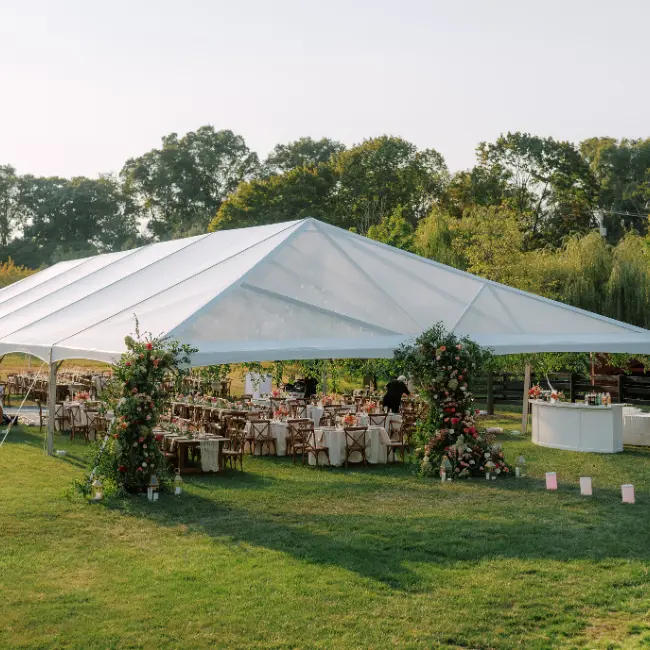
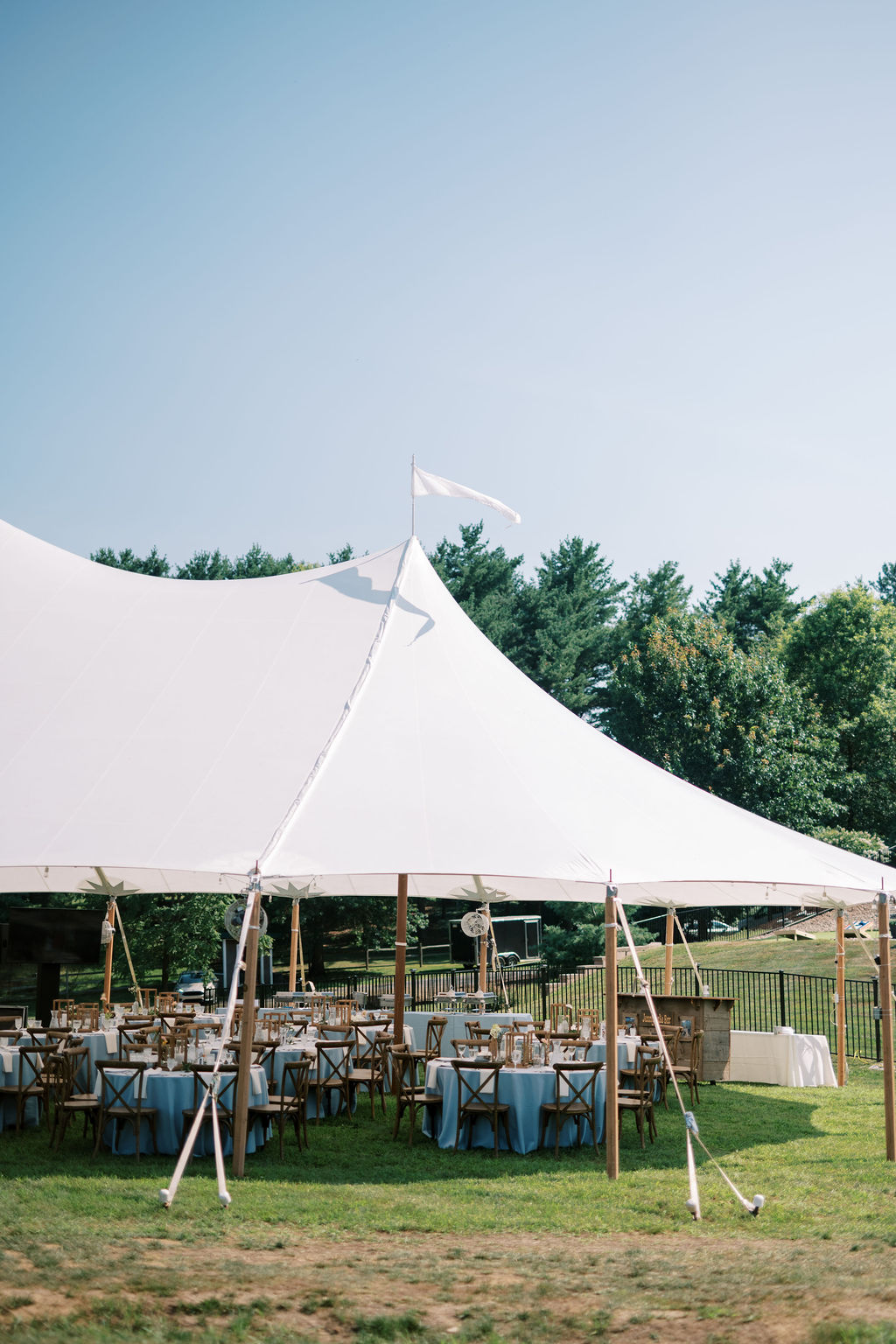
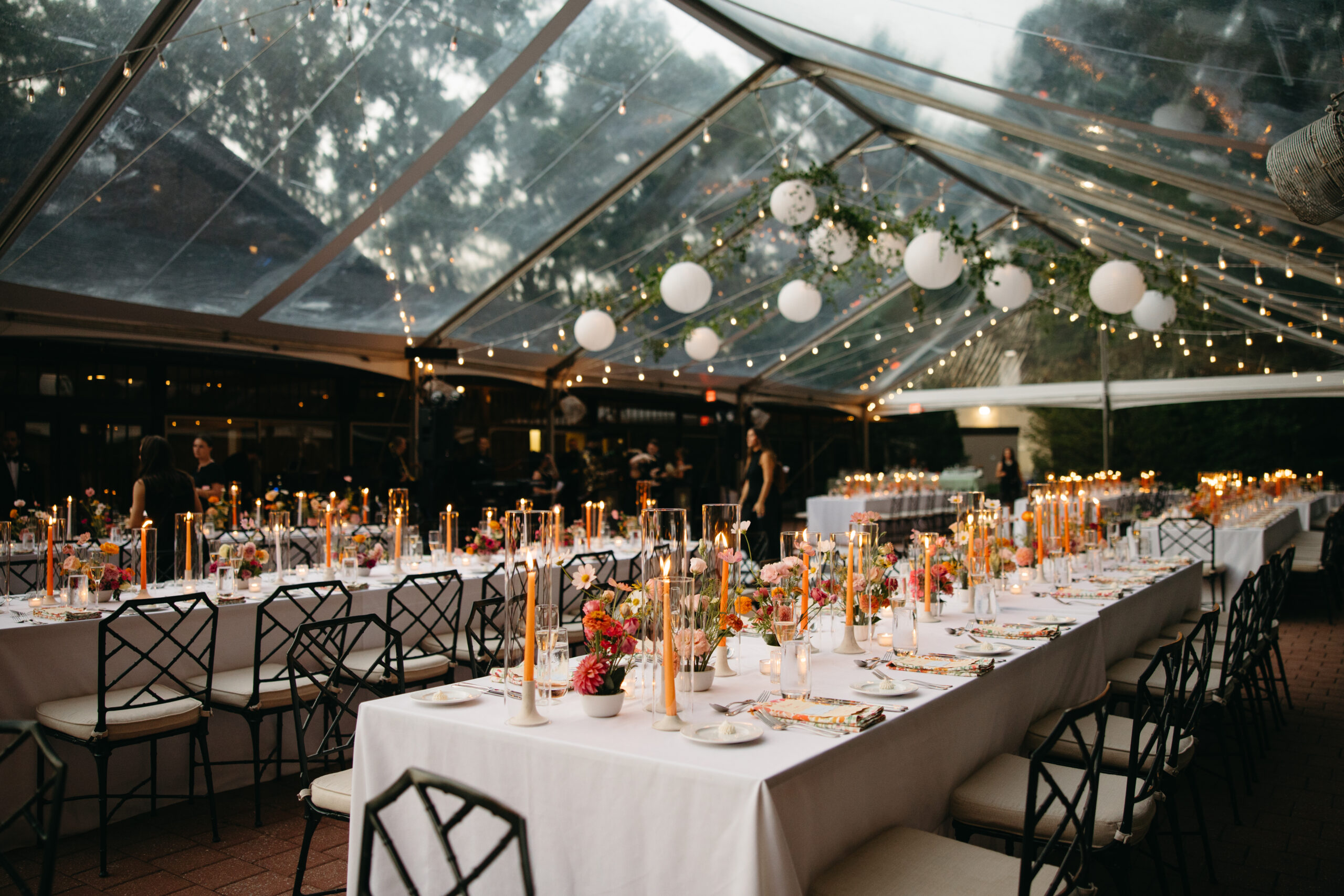
Sailcloth and traditional white-top tents provide overhead coverage while still creating a bright, open atmosphere. Clear-top tents offer views of the sky and surrounding landscape, but direct sunlight through the clear vinyl can produce a greenhouse effect during hot summer days.
That doesn’t mean a clear-top tent can’t work for a summer celebration. Its suitability depends on the event time, location, shade and anticipated weather. A clear top may be especially effective for an evening event after the strongest sunlight has passed.
The best choice balances appearance with how and when the tent will be used. Explore Collective Event Groups’s wedding tent styles or read the pros and cons of clear-top tents before deciding.
Treat Sidewalls as Part of the Weather Plan
Sidewalls aren’t necessarily an all-or-nothing decision.
Open sides allow air to move through the tent and preserve the connection to the surrounding setting. Sidewalls can provide protection when wind, rain or cooler evening temperatures become a concern.
The right configuration may change over the course of the event:
- Open sides can encourage airflow during a warm dinner.
- Selected sidewalls can help block low-angle sunlight.
- Additional walls may be useful if weather approaches.
- Closed sides can help retain warmth if temperatures drop after dark.
Any adjustments should be discussed in advance with the rental company and event team. If conditions may change during the celebration, consider whether a tent attendant should be available to make approved adjustments safely.
Plan for Airflow Before Adding Cooling
Fans and other cooling equipment can improve comfort, but they work best when considered as part of the complete tent plan.
Tent size, ceiling height, sidewall configuration, guest count and table placement all influence air movement. Crowding furniture too tightly or placing large service areas where they interrupt airflow can make the space feel warmer than expected.
The layout should leave appropriate room for:
- Guest circulation
- Service staff
- Open tent sides where possible
- Cooling equipment
- Dance-floor activity
- Bars and food stations
- Safe access to exits
Your rental team can help determine which cooling options are appropriate for the tent and power available at the site.
Give Guests More Than One Comfortable Place to Be
Not every guest will experience the temperature in the same way. Older guests, young children and anyone sensitive to heat may need a shaded place to sit before the reception officially begins.
Look beyond the main tent and consider the entire guest experience:
- Is there shade available during cocktail hour?
- Can guests sit somewhere before the ceremony?
- Is water visible and available before anyone needs to ask?
- Are bars and beverage stations easy to find?
- Is the walk between event spaces reasonable?
- Is there an indoor or shaded retreat nearby?
- Are restrooms easy to reach without a long walk through the sun?
A smaller cocktail tent, marquee, covered walkway or shaded lounge can sometimes improve the event more than adding another decorative element inside the reception tent.
Make Water Easy to Find
Guests shouldn’t have to wait for the bar to open or locate a server to get water.
A hydration station near the arrival area, ceremony or cocktail-hour entrance gives guests immediate access—especially if they’ve walked across a large property or waited outside before the event began.
Water stations can still feel intentional and polished. Glass dispensers, coordinated beverage tubs, attractive shelving and appropriate glassware can make hydration part of the event design rather than an afterthought.
Design the Layout Around How Guests Will Move
Guest comfort isn’t limited to temperature. A tent can also feel uncomfortable when pathways are narrow, chairs back into service routes or everyone converges on the same bar.
The floor plan should account for what happens throughout the event, not just where everything fits at the beginning.
Consider:
- Where guests enter the tent
- How they find their tables
- Whether the bar is visible
- How servers reach each table
- Where lines may form
- How guests access the dance floor
- Whether older guests have quieter seating away from speakers
- How everyone exits if the weather changes
Collective Event Group creates customized layouts to help clients see how seating, bars, dance floors, catering areas and other rentals will work together. You can also browse our tent layout planner for sample floor plans based on tent size, event type and guest count.
Prepare for More Than One Forecast
Summer weather in the Mid-Atlantic can change quickly. A useful weather plan accounts for heat, humidity, rain, wind and a possible temperature shift after sunset.
Discuss these questions with your venue, planner and rental team:
- When will weather-related decisions be made?
- Who has the authority to adjust the plan?
- Which tent walls or equipment will be available?
- Is sufficient power available for lighting and cooling?
- What happens if the ground becomes wet?
- Will a tent attendant be needed?
- Is there a protected route between major event areas?
Making those decisions early prevents the event team from improvising while guests are already arriving.
A Comfortable Summer Event Starts Well Before the Event Date
The best summer tent plans are flexible. They account for the sun at ceremony time, airflow during dinner, the temperature after dark and the way guests move between each part of the celebration.
Those decisions may not be the first details guests notice, but they influence how long people stay, how easily they participate and how much they enjoy the evening.
If you’re planning a late-summer wedding, fundraiser, corporate event or private celebration, these details are worth walking through early.
Collective Event Group provides tents, layouts, climate-control options and event rentals throughout Pennsylvania, New Jersey, Maryland and Delaware. Our team can help you evaluate the site and build a rental plan around your guest count, timeline and event location.
Planning a Summer Tent Event?
Tell us about your date, location and guest count. We’ll help you find the right tent and plan a layout designed around the way your event will actually unfold. Start planning today.